Immersive Projection Mapping
Umbral
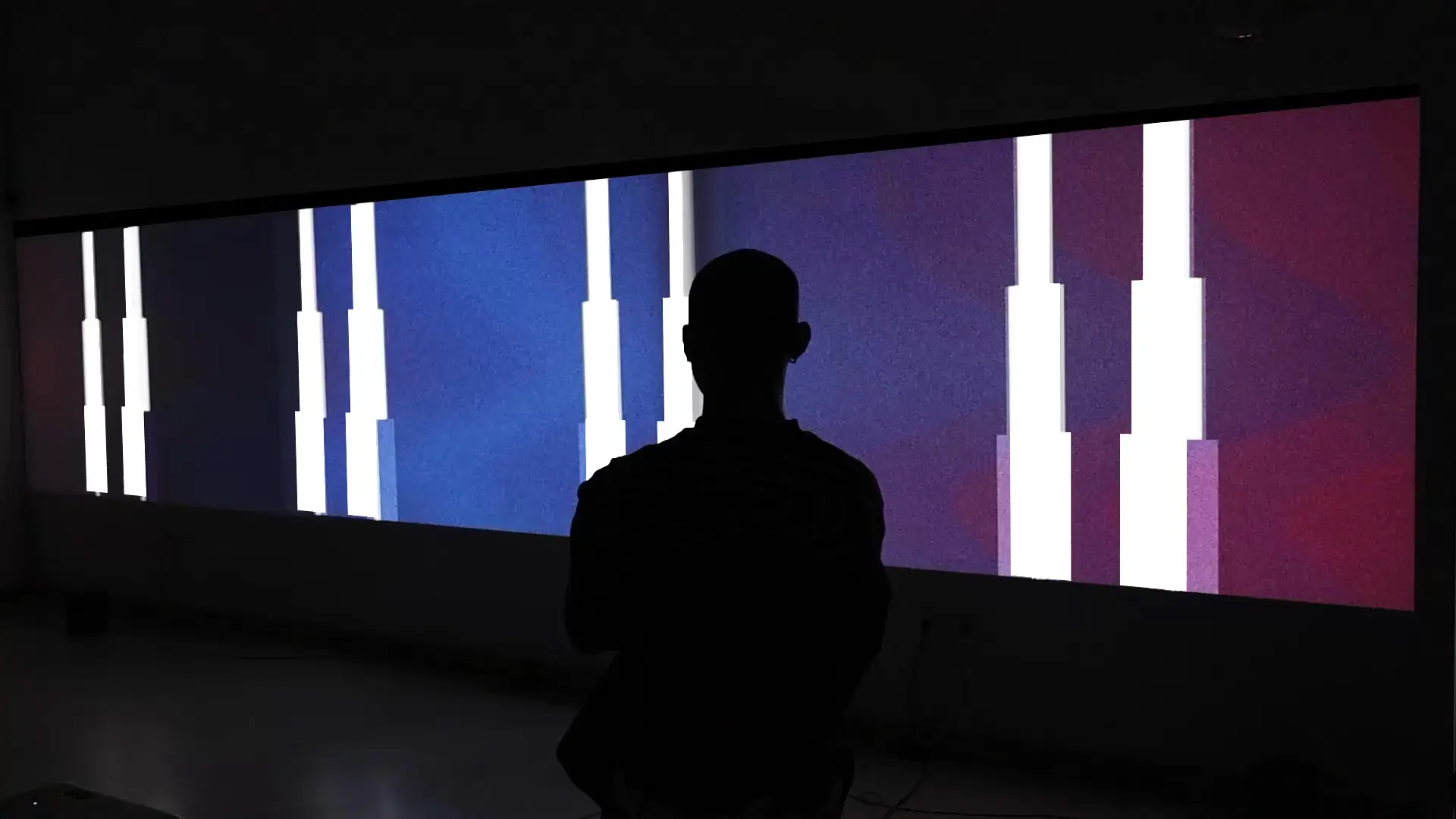
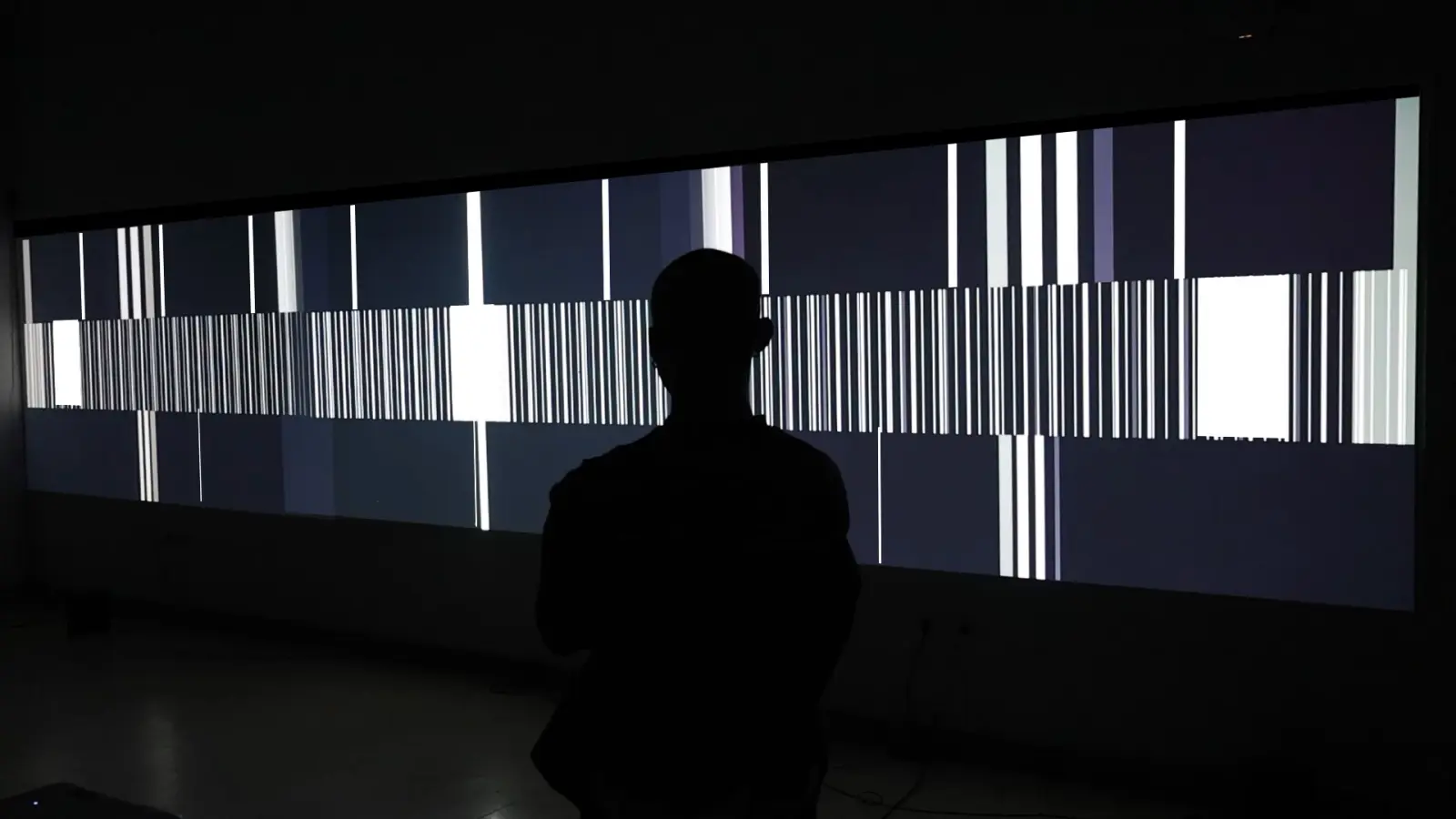
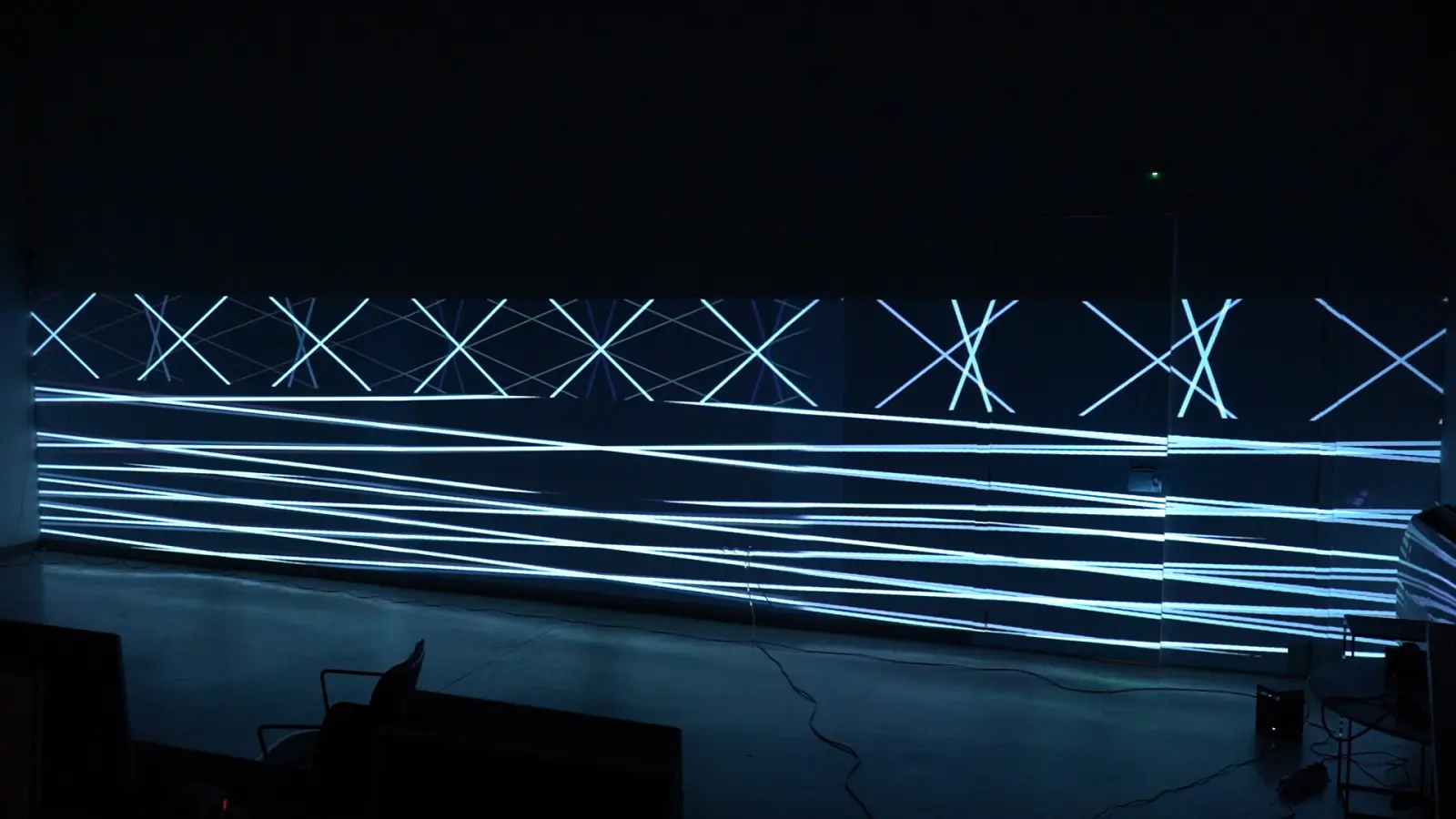
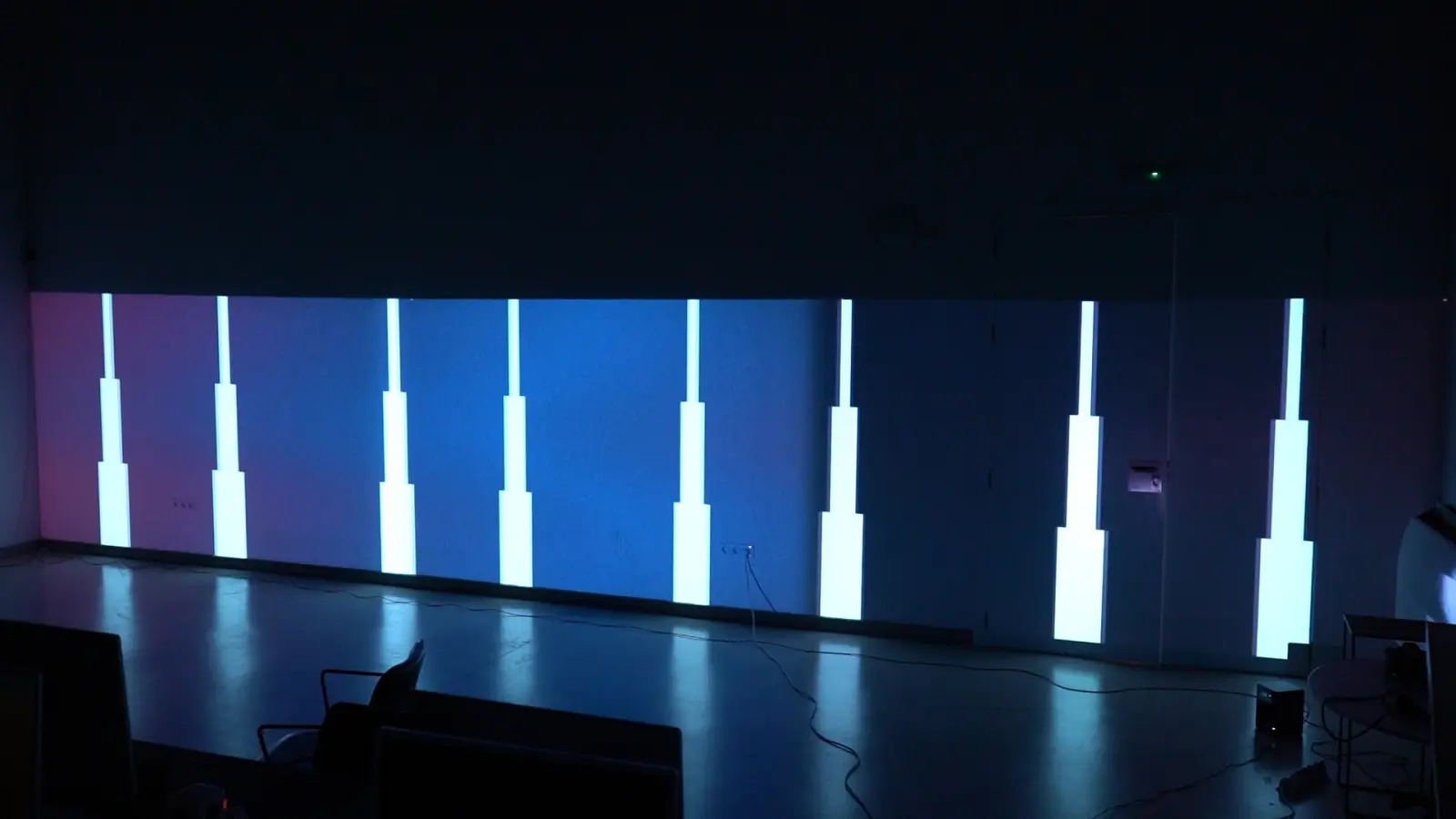
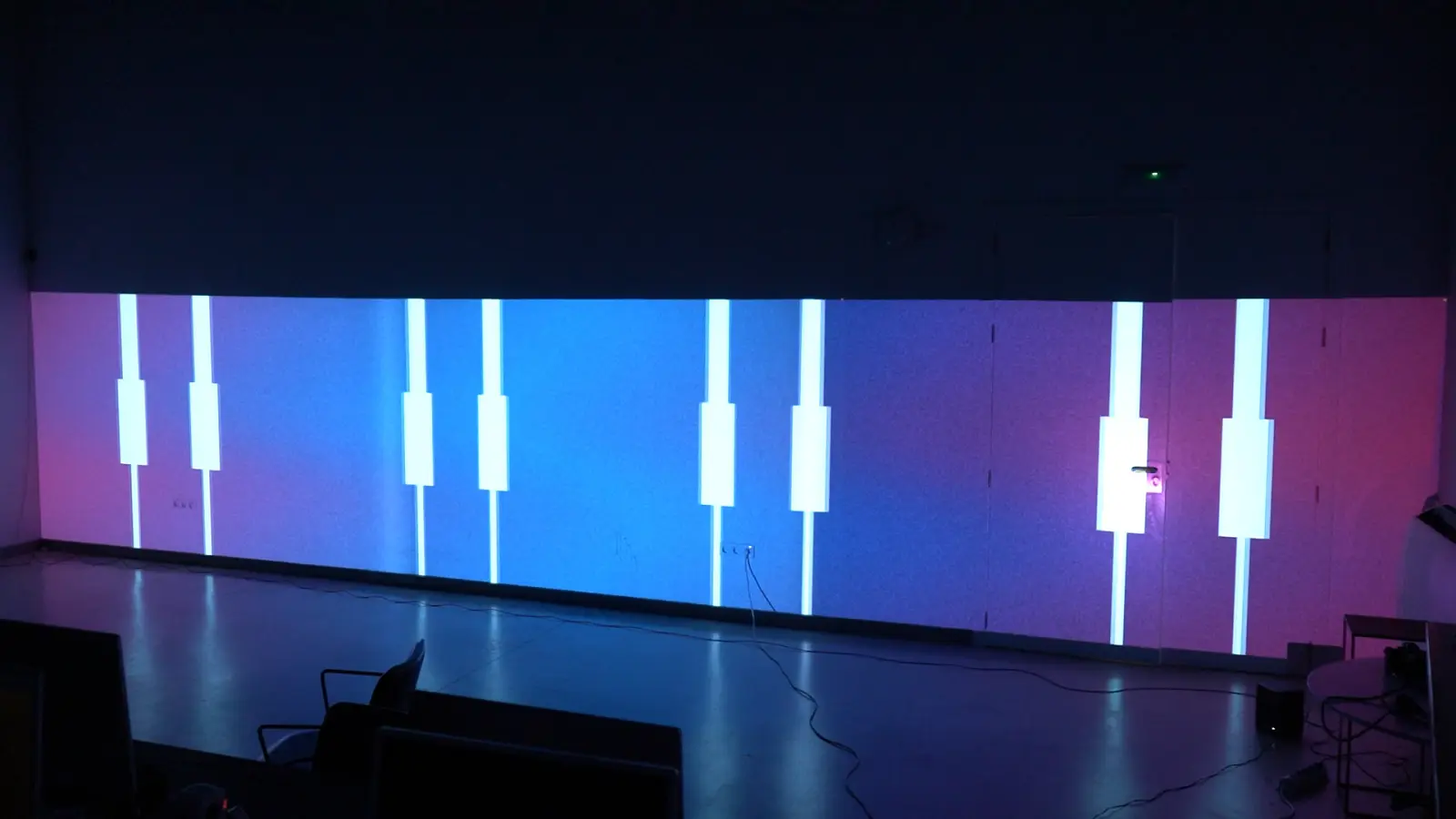
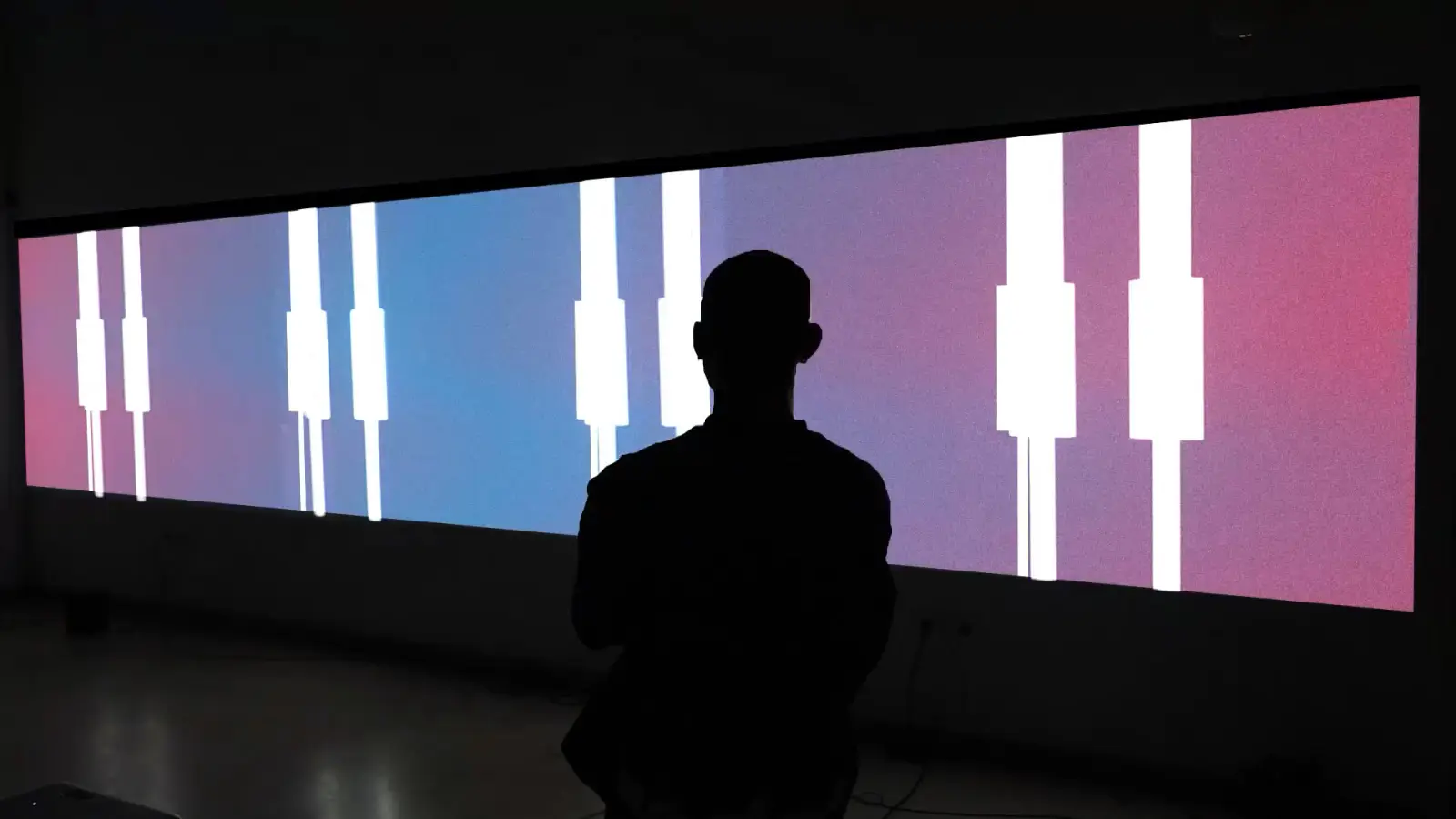
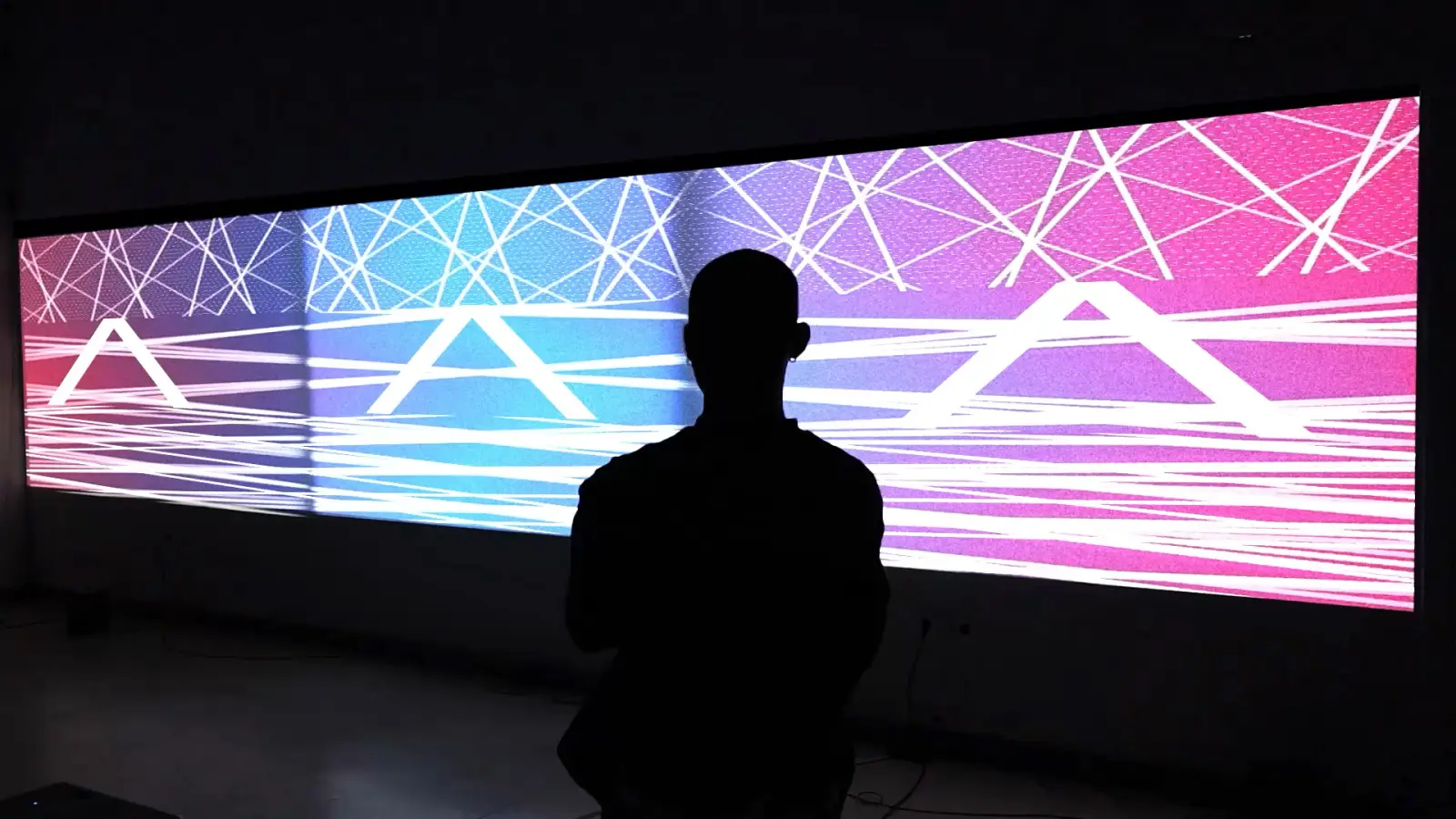
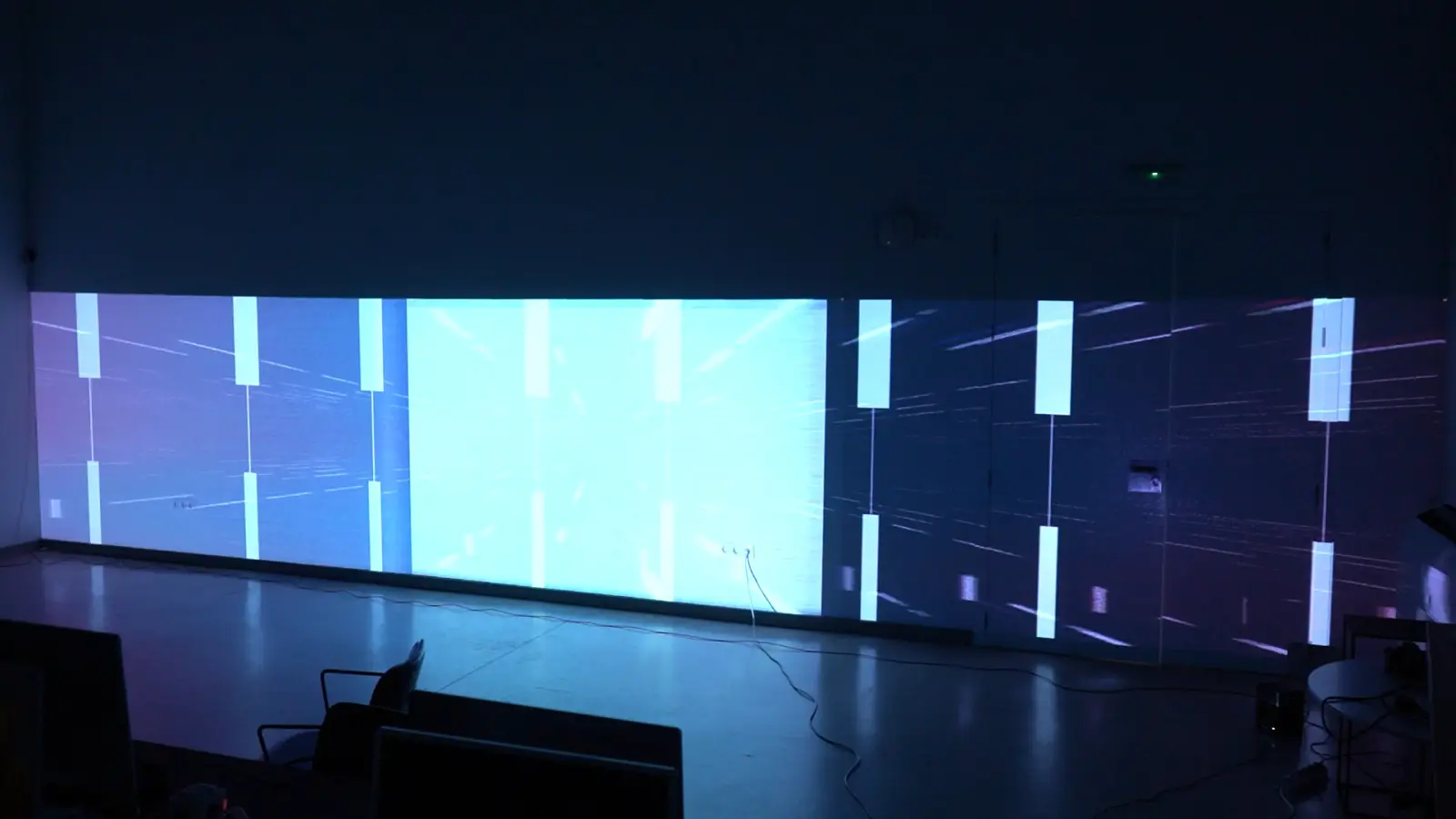
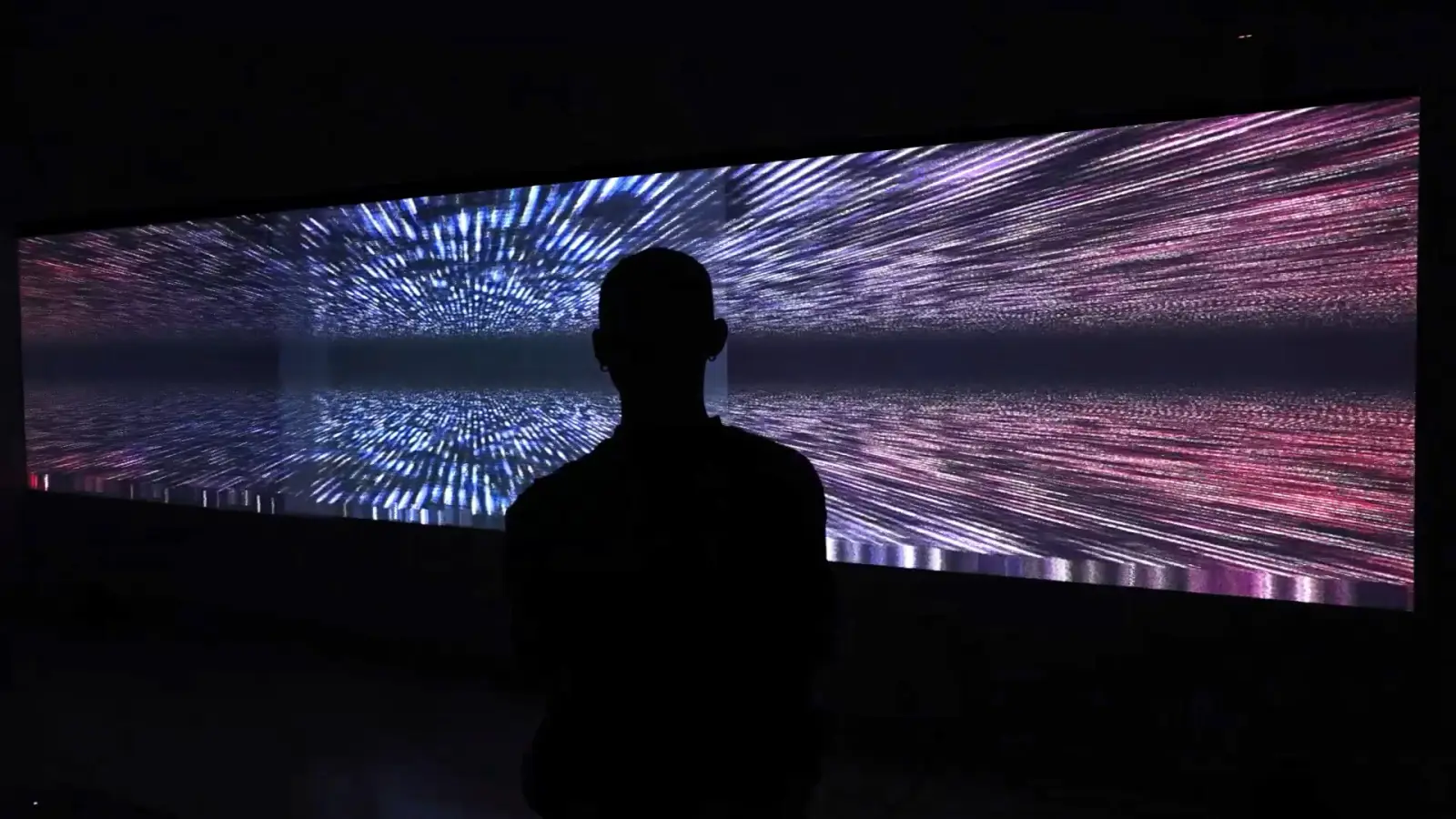
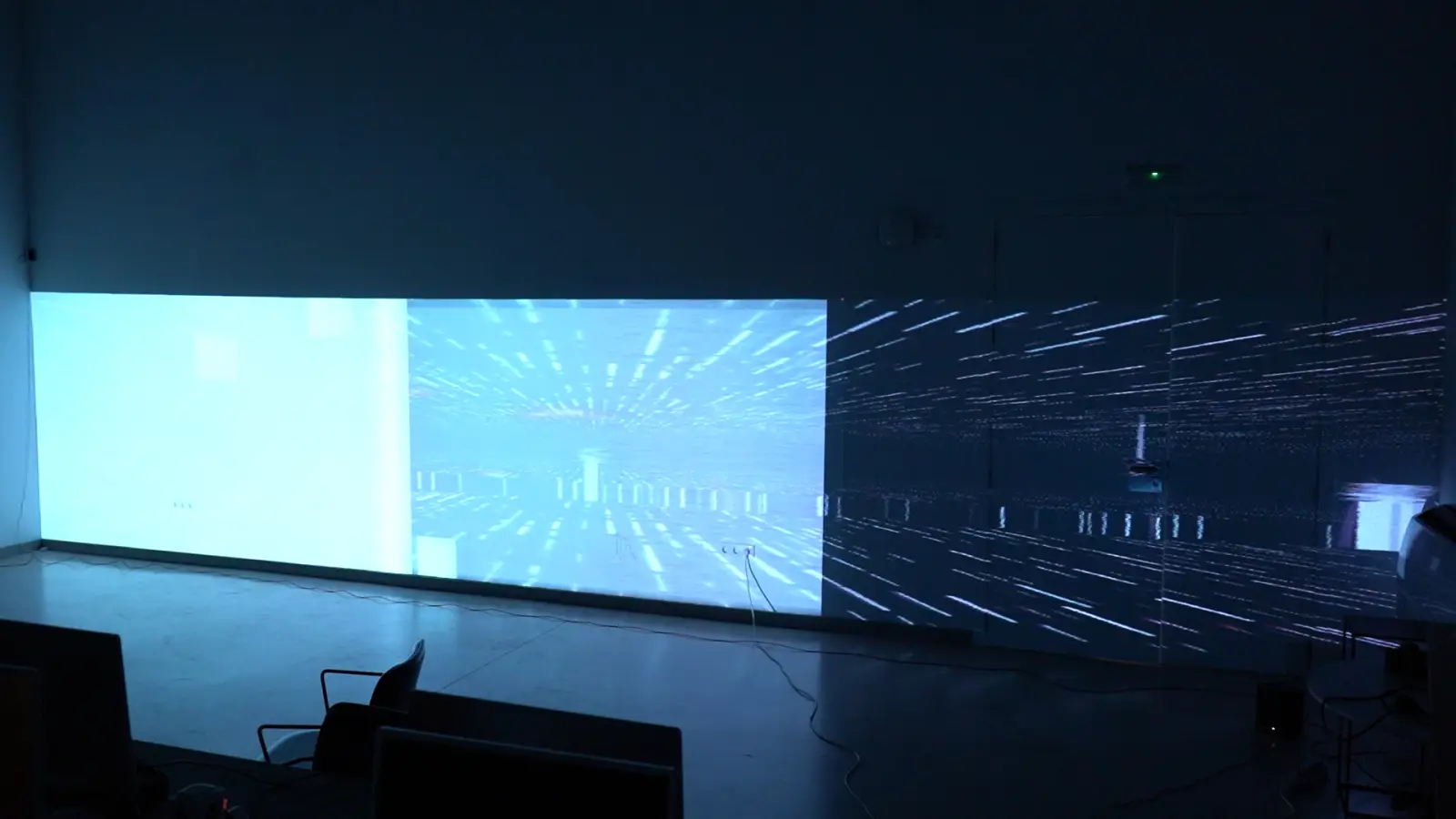
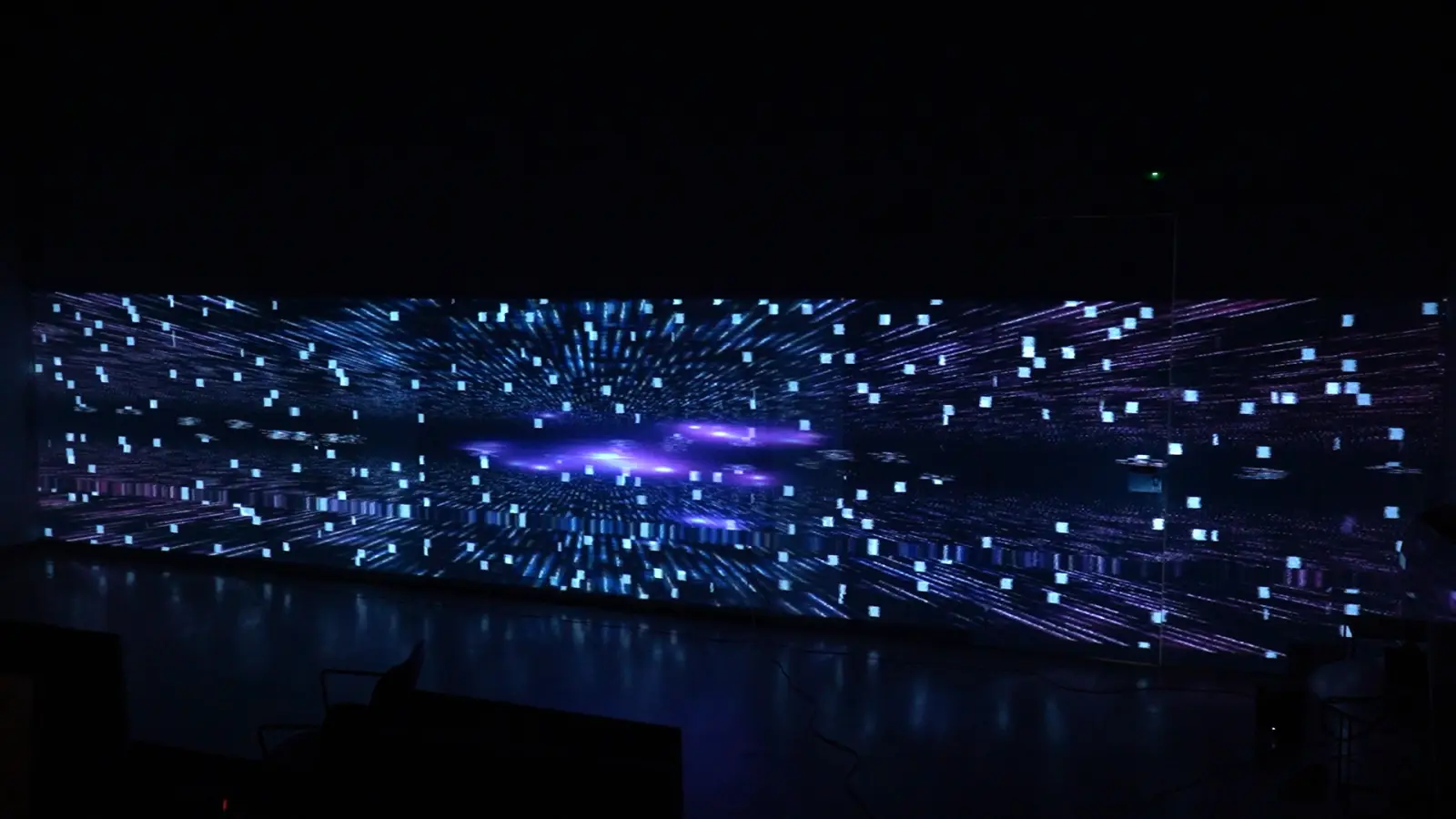
Three Full HD projectors calibrated in MadMapper into one continuous canvas, so the seams disappear and the visual extends as a single surface across the wall.
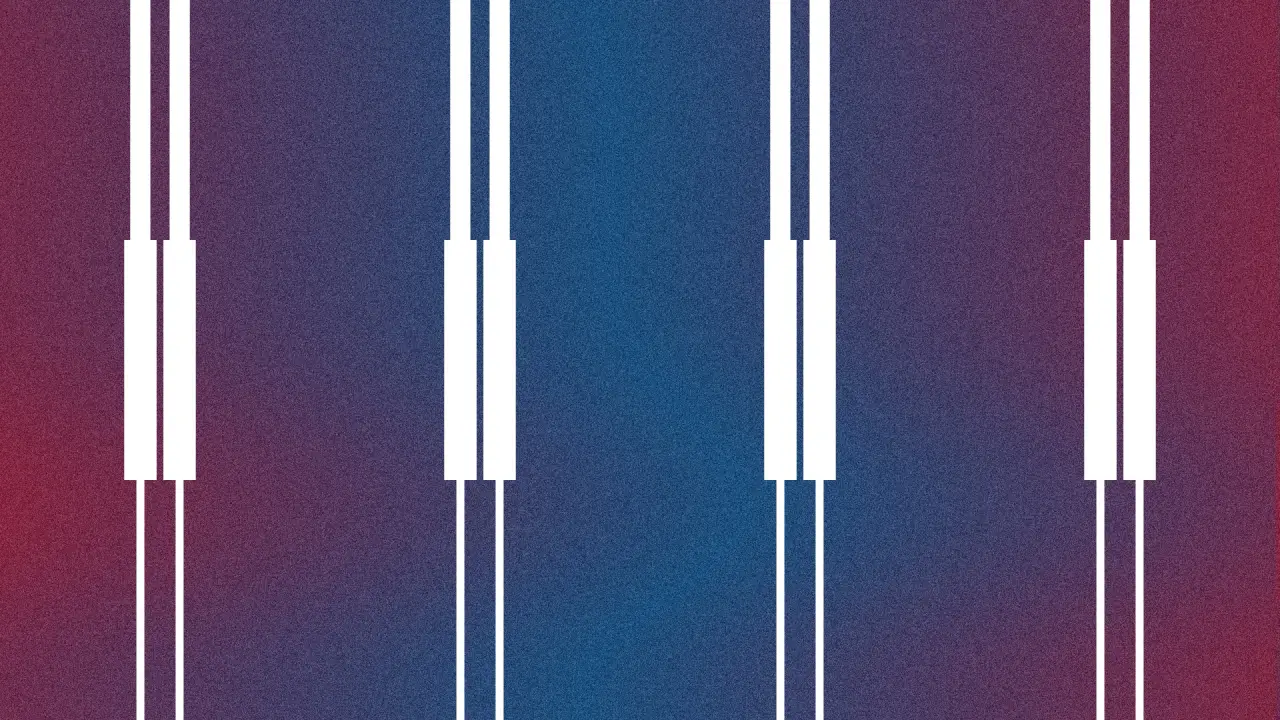
Three outputs, one display
This study asks how multiple projectors can function as a single continuous display. Three Full HD projectors run from one computer through MadMapper; the brief is not three frames side by side, but one image that occupies a larger architectural field.
When the hardware disappears
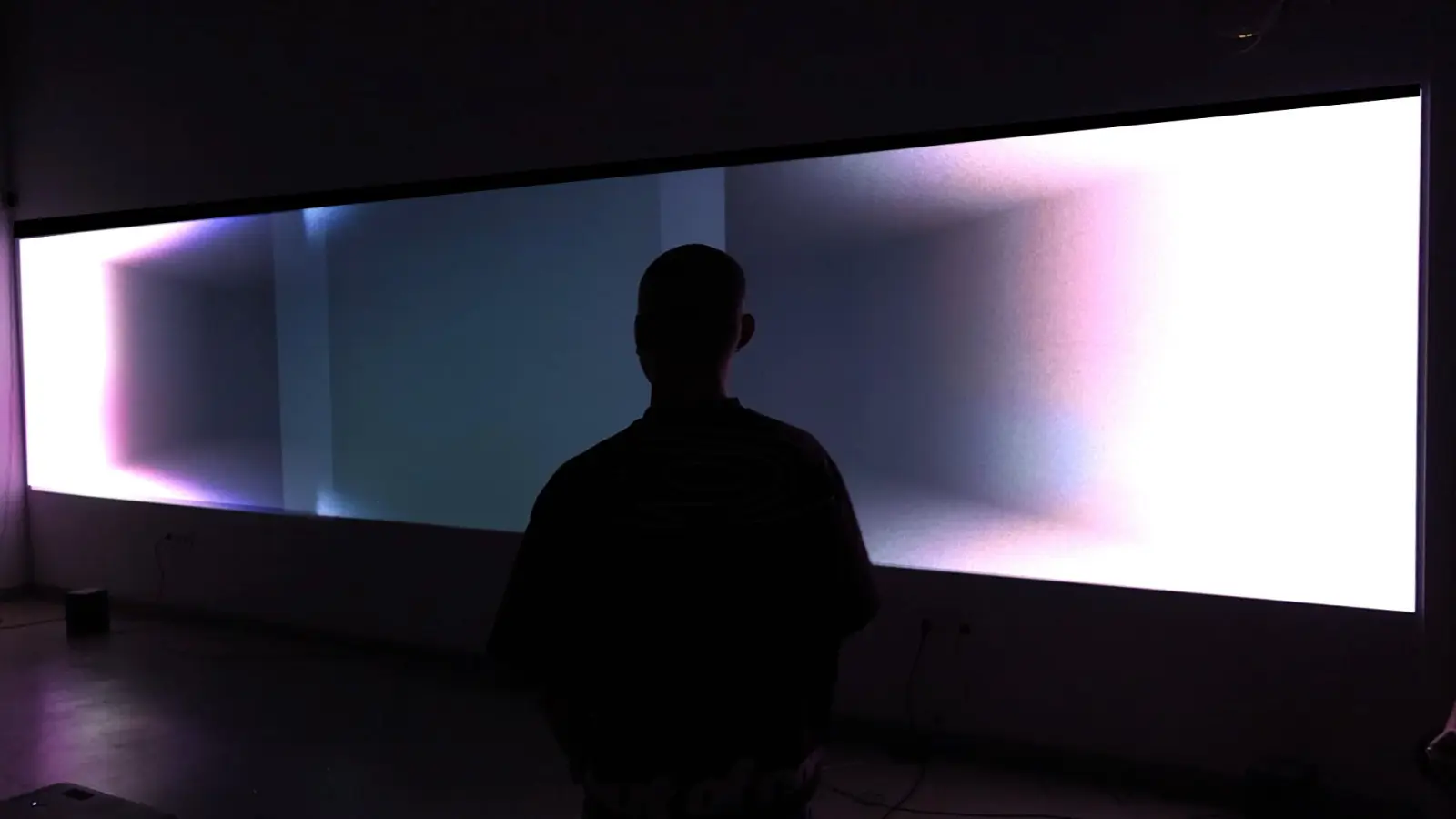
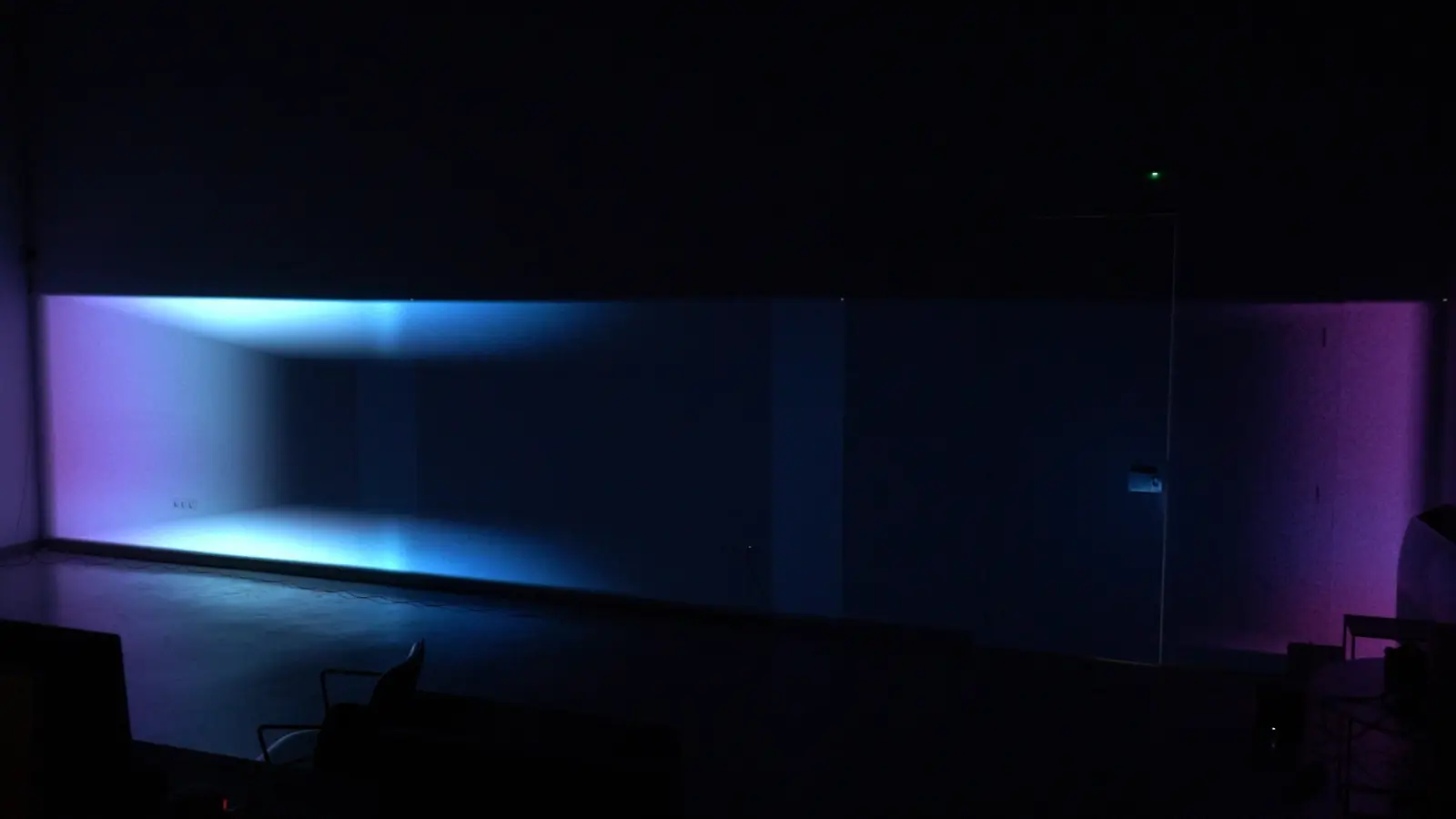
Fragmented projection only works when the joins stop competing with the content. By removing visible boundaries between projectors, attention shifts away from the machines and toward the projected image as one uninterrupted spatial experience: content that can travel the full width without breaking into panels. The soft-edge zone is the umbral: the doorway where separate outputs cross into one field.
MadMapper soft-edge calibration
In MadMapper I created three 1920×1080 outputs and three matching Full HD quad surfaces, each routed to its projector. Soft Edge tools handled the overlap zones: gradual falloff on each side so brightness stays even where images meet. Geometry was the hard part. Small shifts in projector position broke alignment, so quads, corner points, and blend parameters were refined iteratively until luminosity and spatial continuity held across the field. Visuals were authored for the combined canvas and played through the same MadMapper setup.
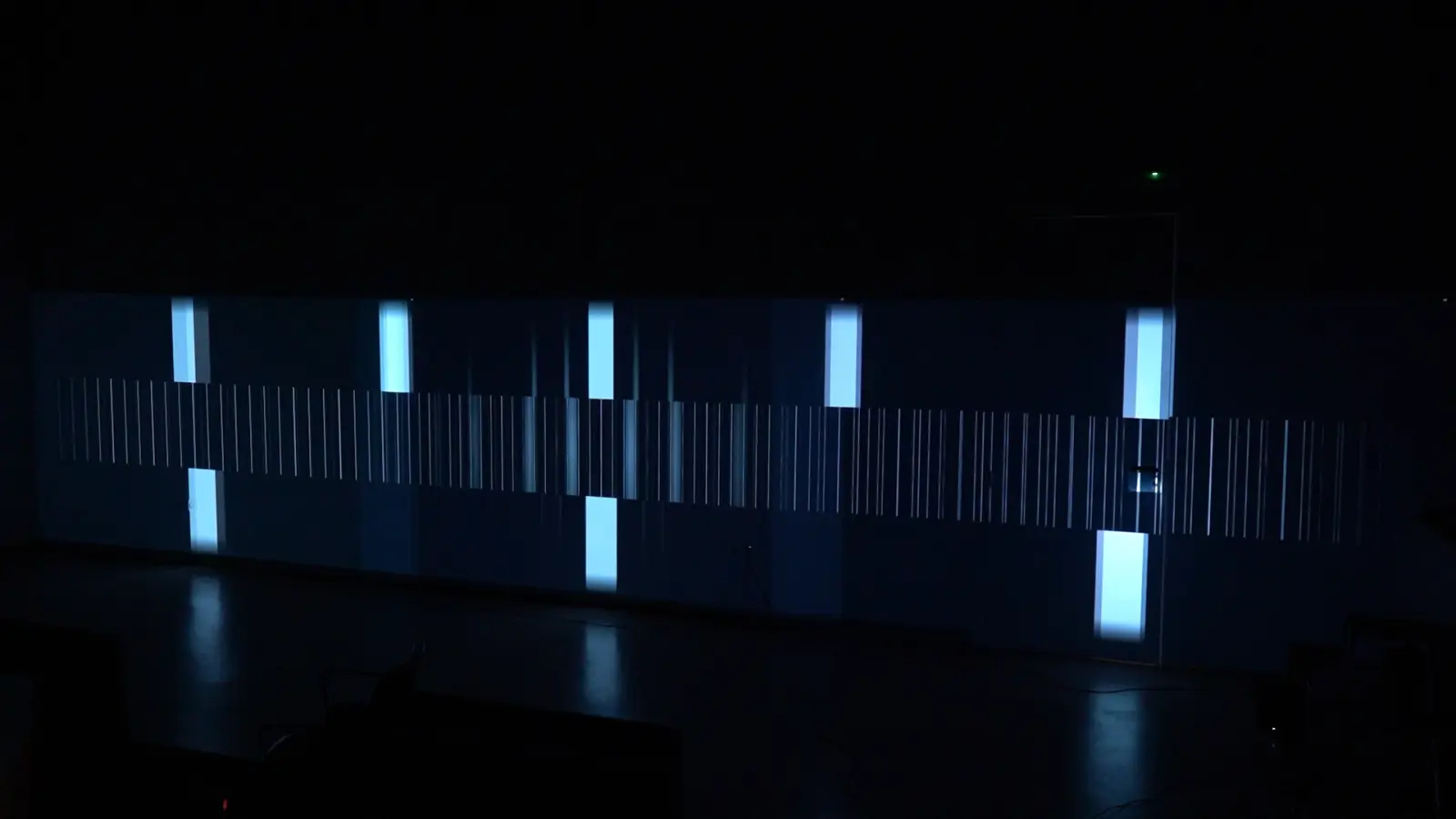
One canvas, three machines
The result is a unified projection surface spanning three synchronized Full HD projectors. Careful calibration removes seams in the overlap, producing smooth transitions and a continuous field suited to mapping and large-format audiovisual work.
Credits
Multi-projector study for the MICME Video Mapping course at LABA Valencia.
Production
Mapping & visuals
- Janus
Tools
- MadMapper